
News · Crypto · openbook · Fri, Nov 13, 2026 8:59 AM
Bitcoin Falls Below $70,000 as Fed Bets and MSCI Exit Weigh
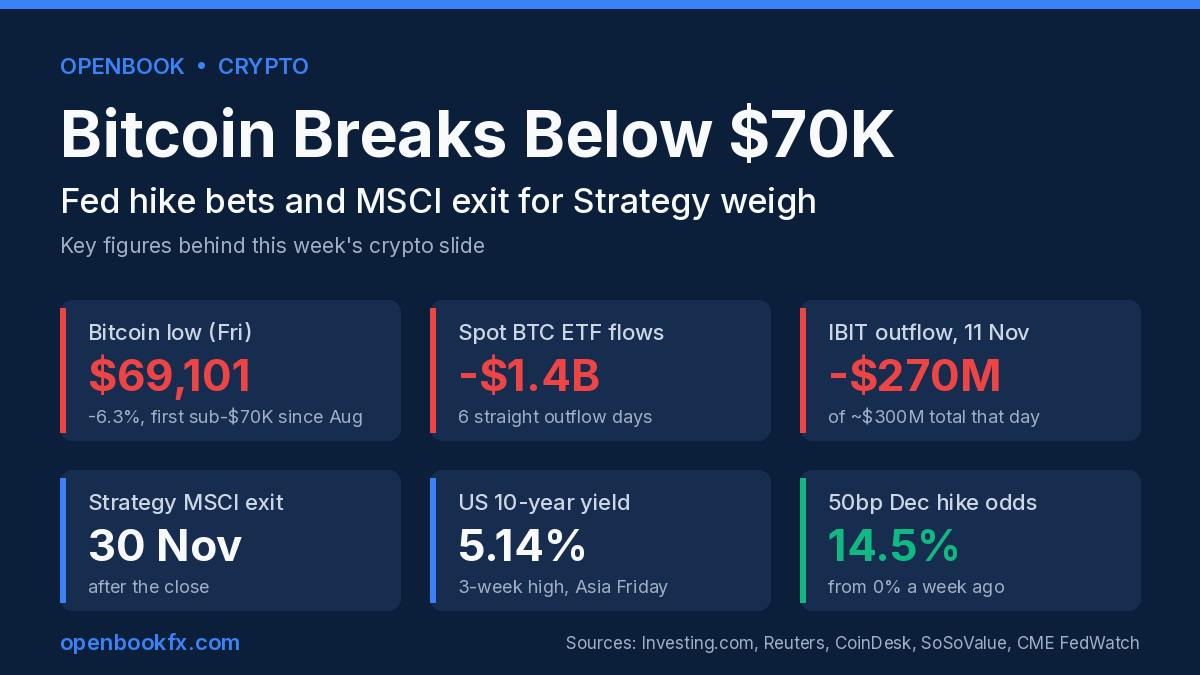
Image from the source feed · openbook
Bitcoin dropped below $70,000 for the first time since August.
Bitcoin slipped below $70,000 early on Friday for the first time since mid-August. The world's largest cryptocurrency fell as much as 6.3% to around $69,101 in Asian trading, according to Investing.com, extending a slide that has run since October. Two very different forces are behind the move: a Federal Reserve that markets now expect to raise rates again, and a technical but important decision by index provider MSCI to drop Strategy, the biggest corporate holder of bitcoin, from its global stock indexes.
What happened
The macro backdrop turned colder this week. US consumer prices rose 0.4% in October, hotter than expected, and a series of Fed officials followed with hawkish comments. Futures now price a December hike of between 25 and 50 basis points, and the CME FedWatch tool showed the chance of an outsized half-point move rising to around 14.5%, from zero a week earlier. The US 10-year Treasury yield touched a three-week high of about 5.14% in Asian trading on Friday, and the dollar firmed.
At the same time, demand from the big US spot bitcoin exchange-traded funds faded. These funds saw net outflows for six straight sessions through 12 November, totalling roughly $1.4 billion over that period, according to flow data compiled by SoSoValue, Farside Investors and Alpha Finance. On Wednesday 11 November alone about $300 million left the funds, with BlackRock's IBIT accounting for nearly $270 million of it.
Then came the index news. On Wednesday MSCI confirmed that Strategy (ticker MSTR) will be removed from the MSCI USA Index, and therefore from broader benchmarks such as the MSCI World, after the close on 30 November. Tokyo-listed Metaplanet, another bitcoin treasury company, and uranium holder Yellow Cake are also on the exclusion list.
Why MSCI is removing Strategy
In October MSCI adopted a new screen for what it calls "non-operating companies": firms that mainly hold financial assets and look more like investment funds than ordinary businesses. Funds are excluded from MSCI's equity benchmarks, and the index provider concluded that Strategy, which holds around 850,000 bitcoin, fits that description better than that of an operating company. Strategy disagrees, arguing that raising capital, managing its treasury and issuing financial products amount to a real business.
It is worth being clear about what the decision does and does not do:
- It does not delist Strategy from Nasdaq, and it does not force the company to sell any bitcoin.
- It does mean that passive funds tracking MSCI indexes must sell their Strategy shares. Strategy estimates those funds hold about 13 million shares, roughly 3.1% of its common stock and less than one day's typical trading volume.
Why it matters for bitcoin
The link between a stock index and the price of bitcoin runs through Strategy's funding model. The company has built its holdings largely by selling new shares and debt, then using the cash to buy bitcoin. That works best when its shares trade at a premium to the value of the bitcoin it owns. Analysts at BloFin Research noted that this premium, measured as mNAV, was already close to 1.08 times.
If losing passive index demand weighs on the share price, each new share sold raises less money, so Strategy would either buy less bitcoin or need to issue more stock to buy the same amount. Over the past few years, corporate treasury buying has been one of the steadiest sources of demand for bitcoin. A slower buyer at the margin, combined with ETF outflows, leaves the market more exposed to macro shocks.
And the macro shock is real. Higher US rates and Treasury yields above 5% raise the return investors can earn on safe cash and bonds, which makes non-yielding, volatile assets such as bitcoin relatively less attractive. A stronger dollar adds pressure, much as it has on gold this week. CoinDesk also noted that bitcoin is now trading well below the roughly $81,500 that Glassnode estimated US spot ETF buyers had paid on average, so many recent ETF holders are sitting on losses.
What to watch next
- US data and Fed speakers. Friday's producer price index (PPI) and further comments from Fed officials will shape how much tightening markets expect in December. A firmer rate outlook has been the main headwind for crypto.
- ETF flows. Daily flow figures for US spot bitcoin ETFs are a simple gauge of institutional appetite. A return to inflows would suggest the selling is easing; a longer streak of outflows would point the other way.
- Strategy's share price and premium. Watch MSTR into the 30 November rebalancing date, and whether the company keeps announcing new bitcoin purchases.
- The $70,000 area. Round numbers often act as psychological reference points. How bitcoin trades around this level in the coming days will show whether the drop draws in buyers or extends the slide.
The bottom line
Bitcoin's fall below $70,000 is less about one headline and more about several pressures arriving at once: a hawkish Fed, Treasury yields above 5%, steady ETF outflows and a question mark over one of its largest corporate buyers. MSCI's decision does not force anyone to sell bitcoin directly, but it can make it harder for Strategy to keep buying at the same pace. The takeaway: crypto is increasingly moved by the same forces as other markets, from interest rates to index rules.
Read our Bitcoin (BTC) guide: what moves it, the key data to watch and when it trades.
This briefing was summarized with automated tools from public reporting by openbook and is general market information, not investment advice. Editorial policy & corrections