News · Markets · openbook · Thu, Nov 5, 2026 8:41 AM
Gold Reclaims $4,100 as Dollar and Yields Slide After Midterms
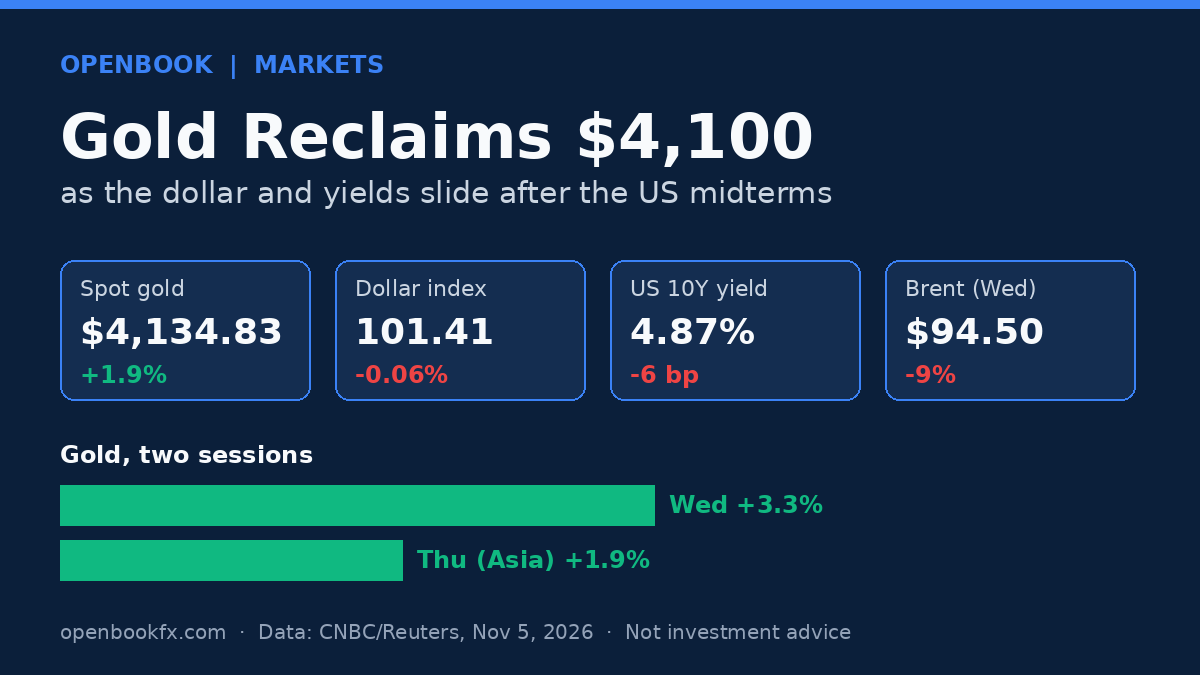
Image from the source feed · openbook
Gold rose above $4,100 after the Democratic midterm sweep pushed the dollar and Treasury yields lower.
Gold is back above $4,100 an ounce. Spot gold rose 1.9% to $4,134.83 in early Asian trading on Thursday, November 5, its highest level since October 22, according to Reuters data reported by CNBC. That came on top of a jump of more than 3% on Wednesday, the metal's biggest one-day gain since mid-August. The move followed the Democratic sweep of both chambers of Congress in the US midterm elections, which pushed the dollar and Treasury yields lower.
What happened
The trigger was political, but the mechanics were classic macro. Once the election result removed a major source of uncertainty, three things moved together:
- The dollar weakened. The dollar index fell 0.33% on Wednesday to close at 101.50, after touching a two-month low of 101.20 during the session, and slipped again to about 101.41 on Thursday.
- Yields eased. The 10-year US Treasury yield fell around 6 basis points overnight and was near 4.87% in early Tokyo trade.
- Oil dropped sharply. Brent crude fell about 9% on Wednesday to around $94.50 a barrel, as investors bet the new balance of power in Washington could speed up an end to the Iran war.
Other precious metals followed. Spot silver rose 1.7% to $53.12, platinum gained 2.1% to $1,527.65 and palladium climbed 2.6% to $1,030.14, according to the same CNBC report.
Why a weaker dollar and lower yields help gold
Gold is priced in US dollars. When the dollar falls, an ounce of gold becomes cheaper for buyers using euros, yen or pounds, which can lift demand. Gold also pays no interest, so its main competitor is safe assets that do, such as US Treasuries. When yields fall, the "cost" of holding gold instead of bonds goes down, and gold tends to look more attractive.
What makes this rally interesting is that it did not come from rising fear. Gold is often described as a safe haven that rises in a crisis. This time it climbed while stocks rallied and oil fell. In other words, the move was driven by rates and the currency, not by panic.
The oil and inflation link
The drop in oil matters for gold through the interest-rate channel. High energy prices have kept inflation pressure alive, and that is a big reason markets still expect the Federal Reserve to raise rates. Citi has argued that a sustained fall in oil could shift the Fed from hiking to cutting and revive gold's rally, with targets of $4,500 over three months and $5,000 over six to 12 months, as reported by investingLive.
That is one bank's scenario, not a forecast you should treat as certain. And for now, the rate market has not changed its mind. CME FedWatch data showed an 81.2% probability of a Fed hike of at least 25 basis points at the December meeting on Thursday, up from 77.4% a day earlier. So there is a gap between what gold is doing and what rate futures are pricing.
The $4,000 level
Analysts are watching round numbers. Linh Tran, market analyst at XS.com, told Reuters that holding above $4,000 is crucial for the recovery, and that continued support from investment flows and yields could open the way toward $4,200 and then $4,400. Levels like these are not magic, but many market participants watch them, which is why they often become points where buying or selling picks up.
What it means for the bigger picture
For anyone following markets, the past two sessions are a useful lesson in how assets connect. A single event, an election, fed into the dollar, bond yields and oil at the same time, and gold reacted to all three. It also shows that the same news can hit sectors in very different ways: US energy and defence stocks fell on Wednesday, while consumer and clean-energy names gained.
It is also a reminder that gold can move a lot in a short time. A gain of roughly 5% in two days is a big move for an asset many people think of as "slow". Volatility cuts both ways, and a reversal in the dollar or yields could take back part of the gains just as quickly.
What to watch next
- US nonfarm payrolls (Friday, November 6). A strong jobs report could push yields and the dollar back up and test gold's rally. A weak one would support the idea that the Fed may not need to keep hiking.
- Bank of England decision (Thursday). The BoE is expected to raise rates to 4%. Sterling was near a seven-week high against the dollar ahead of the decision, and the result will feed into broader dollar moves.
- Oil and the Iran talks. If the drop in crude holds, inflation expectations could ease further. A new supply shock in the Strait of Hormuz would push the other way.
- Fed pricing for December. Watch whether the roughly 80% probability of a hike starts to fall. If it does, that would line up rate expectations with what gold is already doing.
- The $4,000 area. Whether gold can stay above it after the jobs data will say a lot about how solid this recovery is.
Sources: CNBC/Reuters, investingLive, FXBrokerTrust, CME FedWatch, Dawn/Reuters. Prices as of early Thursday, November 5, 2026. This article is for educational purposes only and is not investment advice.
Read our Gold (XAU/USD) guide: what moves it, the key data to watch and when it trades.
This briefing was summarized with automated tools from public reporting by openbook and is general market information, not investment advice. Editorial policy & corrections