News · FX & macro · openbook · Thu, Nov 5, 2026 8:41 AM
Dollar Hits One-Month Low as Democrats Sweep US Midterms
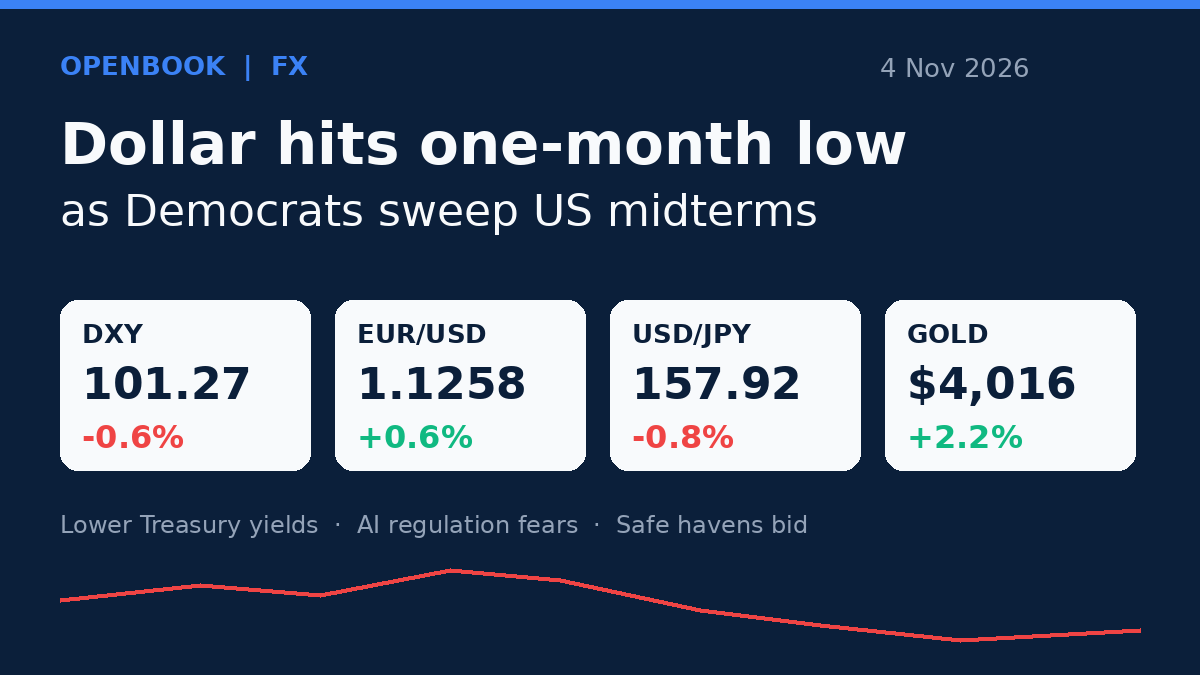
Image from the source feed · openbook
The US dollar fell to a one-month low as Democrats won both houses of Congress.
The US dollar fell to a one-month low on Wednesday, 4 November, as results from the US midterm elections showed Democrats winning majorities in both the Senate and the House of Representatives, according to Reuters and Associated Press counts. Markets had expected a closer race, and the size of the result caught many investors off guard. The reaction spread quickly: Treasury yields fell, gold jumped back above $4,000 an ounce, tech-heavy stock futures dropped and safe-haven currencies such as the Japanese yen and the Swiss franc gained.
What happened
The dollar index (DXY), which measures the greenback against a basket of six major currencies, fell about 0.6% to 101.27 in Asian trading, its lowest level in a month, according to Reuters. The move came after the index had been trading close to its 2026 high reached in October.
- EUR/USD rose about 0.6% to around $1.1258.
- USD/JPY fell close to 0.8%, with the yen strengthening to about 157.9 per dollar.
- USD/CHF dropped about 0.6% to around 0.8159.
- GBP/USD gained about 0.3% to around $1.3458, ahead of Thursday's Bank of England decision.
- The US 10-year Treasury yield fell roughly 5 basis points to about 4.915%.
- Spot gold climbed more than 2% to around $4,016 per ounce, per Reuters.
In equities, Nasdaq 100 futures initially fell more than 2% before cutting losses to trade around 0.6% to 0.8% lower, while S&P 500 futures were down roughly 0.4% to 0.6%. In Asia, AI-linked chipmakers led the selling.
Why the dollar fell
Elections matter to currencies mainly through what they change about future policy, and through how investors feel about risk. Three channels stood out on Wednesday.
1. Lower Treasury yields. Investors bought US government bonds as a safe place to park money while they weighed the new political landscape. When bond prices rise, yields fall, and lower yields make holding dollars a little less attractive compared with other currencies. A Democratic Congress facing a Republican president also points to gridlock, which can limit new government spending and therefore the amount of new debt the Treasury needs to issue.
2. Worries about the AI trade. According to Reuters, investors fear a Democratic Congress could bring tougher regulation of the artificial intelligence sector and slow the data-centre buildout that has powered US tech stocks and part of US growth. "The price action is consistent with concerns about greater scrutiny on AI in the event of a Democratic sweep," said Moh Siong Sim, currency strategist at OCBC. If one of the main engines of US growth looks less certain, the case for a strong dollar weakens too.
3. Fewer rate-hike bets. Traders reined in expectations for further US rate hikes next year, Reuters reported. Even so, CME's FedWatch tool still showed around a 79% to 80% chance that the Federal Reserve raises rates in December, helped by Tuesday's JOLTS report, which showed job openings rising to 7.52 million in September.
Why the yen, the franc and gold gained
When uncertainty rises, money tends to flow toward assets seen as safer stores of value. The yen and the Swiss franc were the biggest winners among major currencies, and gold benefited twice: from the weaker dollar, which makes bullion cheaper for buyers using other currencies, and from falling real yields, which reduce the cost of holding an asset that pays no interest. Pepperstone's Chris Weston told Reuters that demand for protection against "a potentially more unpredictable and confrontational Trump administration" was also supporting gold buyers.
What it does not change
It is worth keeping the move in perspective. Trade and tariff policy remain largely under presidential and executive control, as MUFG Research noted before the results, so a new Congress does not automatically rewrite those rules. The Fed is also independent from Congress, and its next decision will depend on inflation and jobs data, not on the election. A one-day drop of around half a percent in the dollar index is meaningful, but it does not by itself mark a change in trend.
What to watch next
- Final election counts: some House and Senate races were still being called, and the exact size of the majorities will shape how much legislative change is realistic.
- US data today: the ADP private payrolls report and the ISM Services PMI, both due Wednesday.
- Bank of England, Thursday: the Monetary Policy Committee is expected to raise rates for the first time since August 2023, a key event for sterling.
- US non-farm payrolls, Friday: the jobs report will test how firmly markets are pricing a December Fed hike, and therefore whether the dollar's slide extends or reverses.
- Tech earnings and AI policy headlines: any early comments from Democratic leaders on AI or data-centre regulation could keep tech stocks, and with them the dollar, volatile.
In short, the midterm result pushed investors toward safety: lower yields, a softer dollar, firmer yen, franc and gold, and pressure on AI-linked stocks. Whether this becomes a lasting shift will depend less on politics and more on this week's data and on what the Fed says next.
This article is for educational and informational purposes only and is not investment advice. Market figures are as reported by Reuters, Investing.com, CNBC and FXStreet in early European trading on 4 November 2026.
Read our Gold (XAU/USD) guide: what moves it, the key data to watch and when it trades.
This briefing was summarized with automated tools from public reporting by openbook and is general market information, not investment advice. Editorial policy & corrections