
News · FX & macro · openbook · Tue, Nov 3, 2026 9:06 AM
RBA Hikes to 4.85%, Yet the Australian Dollar Slips
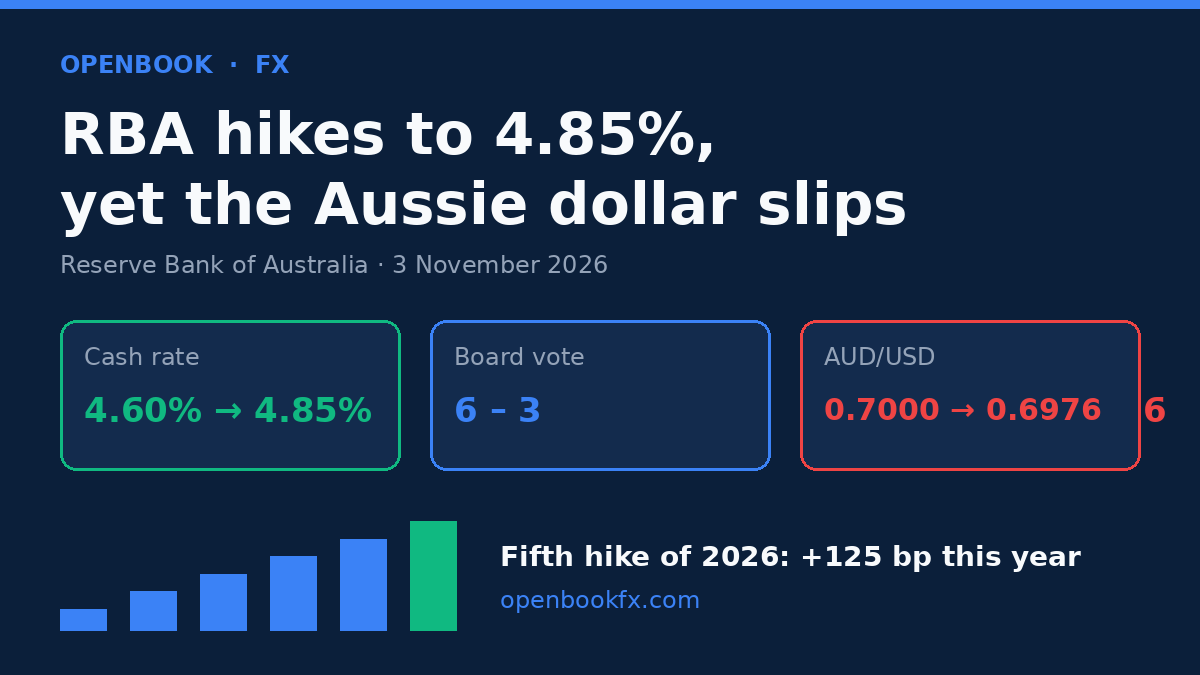
Image from the source feed · openbook
The RBA raised rates to 4.85%, an 18-year high, but a split 6-3 vote and softer guidance pushed the Australian dollar lower.
What happened
The Reserve Bank of Australia (RBA) raised interest rates again on Tuesday 3 November 2026. According to the official statement from the RBA's Monetary Policy Board, the cash rate target rose by 25 basis points, from 4.60% to 4.85%. That is the highest level since 2008 and the fifth increase this year, which adds up to 125 basis points of tightening in 2026.
Normally, a higher interest rate makes a currency more attractive, because holding it pays more. Yet the Australian dollar went the other way. AUD/USD briefly traded just above 0.7000 after the announcement and then slipped back to around 0.6975; the RBA's own reference rate at 4pm Sydney time was 0.6976. Australia's 10-year government bond yield also fell, from about 5.16% to around 5.10%, as reported by MarketWatch.
Why the currency fell after a rate hike
Markets trade on expectations, not just on news. Before the meeting, a 25 basis point hike was already around 80% priced in, according to Commonwealth Bank economists quoted by ABC News. When an outcome is that widely expected, the decision itself adds little new information. What moves the price is the message about what comes next. Three details in that message looked softer than many traders had hoped:
- A split vote. Six of the nine Board members voted for the hike, while three wanted to keep rates at 4.60%. At the previous hike in September the decision was unanimous.
- Softer guidance. As FOREX.com noted, the statement dropped an explicit reference to the possibility of further hikes. Instead, the Board said it will be "attentive to the data".
- More focus on slowing growth. Analysts quoted by MarketWatch pointed to the bank's attention to weaker output growth, rising unemployment and housing pressures, which could eventually help cool inflation on their own.
Put together, many market participants read this as a "dovish hike": the rate went up, but the door to more increases looks less open. This pattern is often described as "buy the rumour, sell the fact". The currency had already risen in anticipation, and once the event happened some of those positions were closed.
Why the RBA still hiked
The RBA's reasons for raising rates are serious. The Board said inflation "remains elevated" and is "broadly based", meaning it is not limited to a few products. Australia's annual consumer price inflation was 4.3% in September, well above the RBA's 2–3% target range.
The central bank also revised its inflation outlook materially higher. It now does not expect inflation to reach the top of its target range until late 2027, around three quarters later than it previously forecast. Part of this comes from higher fuel and commodity prices linked to the conflict in the Middle East. Part of it is domestic: the RBA said capacity pressures are a little tighter than it thought, firms are passing higher costs on to customers, and AI-related investment is pushing up prices of technology-related goods. The Board also warned that some measures of inflation expectations have risen, and that higher expectations could become "embedded".
Why it matters beyond Australia
The RBA decision is a useful example of a tension many central banks face right now. Inflation is still too high, but growth is slowing and borrowing costs are already elevated. Raising rates further risks hurting the economy; stopping too early risks letting inflation settle at a higher level.
The global backdrop is also shifting quickly. On Monday, Brent crude fell more than 7% on hopes of progress in talks to end the US–Iran conflict, according to Reuters via Investing.com. Cheaper energy can ease inflation pressure everywhere, including in Australia, where fuel costs were one of the reasons given for the higher inflation forecasts. At the same time, risk appetite remains fragile ahead of the US midterm elections, which are also taking place on Tuesday. The Australian dollar is often treated as a "risk-sensitive" currency, so it tends to weaken when investors become more cautious.
What to watch next
- The next RBA meeting on 8 December 2026. Some economists, such as UBS's chief economist quoted by MarketWatch, now see a December hike as unlikely, while the RBA's own forecast assumptions suggest scope for one more increase. That gap is worth following.
- Australian inflation data on 25 November. The next monthly CPI release will show whether price pressures are starting to ease.
- Oil prices. If the drop in crude lasts, it could reduce the inflation pressure the RBA described and support the case for a pause.
- The US midterm results and US data this week. Moves in the US dollar and in global risk sentiment often matter as much for AUD/USD as decisions made in Sydney.
The key lesson from Tuesday is simple: in currency markets, what a central bank says about the future can matter more than what it does today. A rate hike that markets fully expected, delivered with a more cautious tone, can weaken a currency instead of strengthening it.
This article is for educational purposes only and is not investment or trading advice.
Read our AUD/USD guide: what moves it, the key data to watch and when it trades.
This briefing was summarized with automated tools from public reporting by openbook and is general market information, not investment advice. Editorial policy & corrections